# Mumbai–Pune Missing Link: Real Estate Impact Explained (2026 Guide)
## Introduction
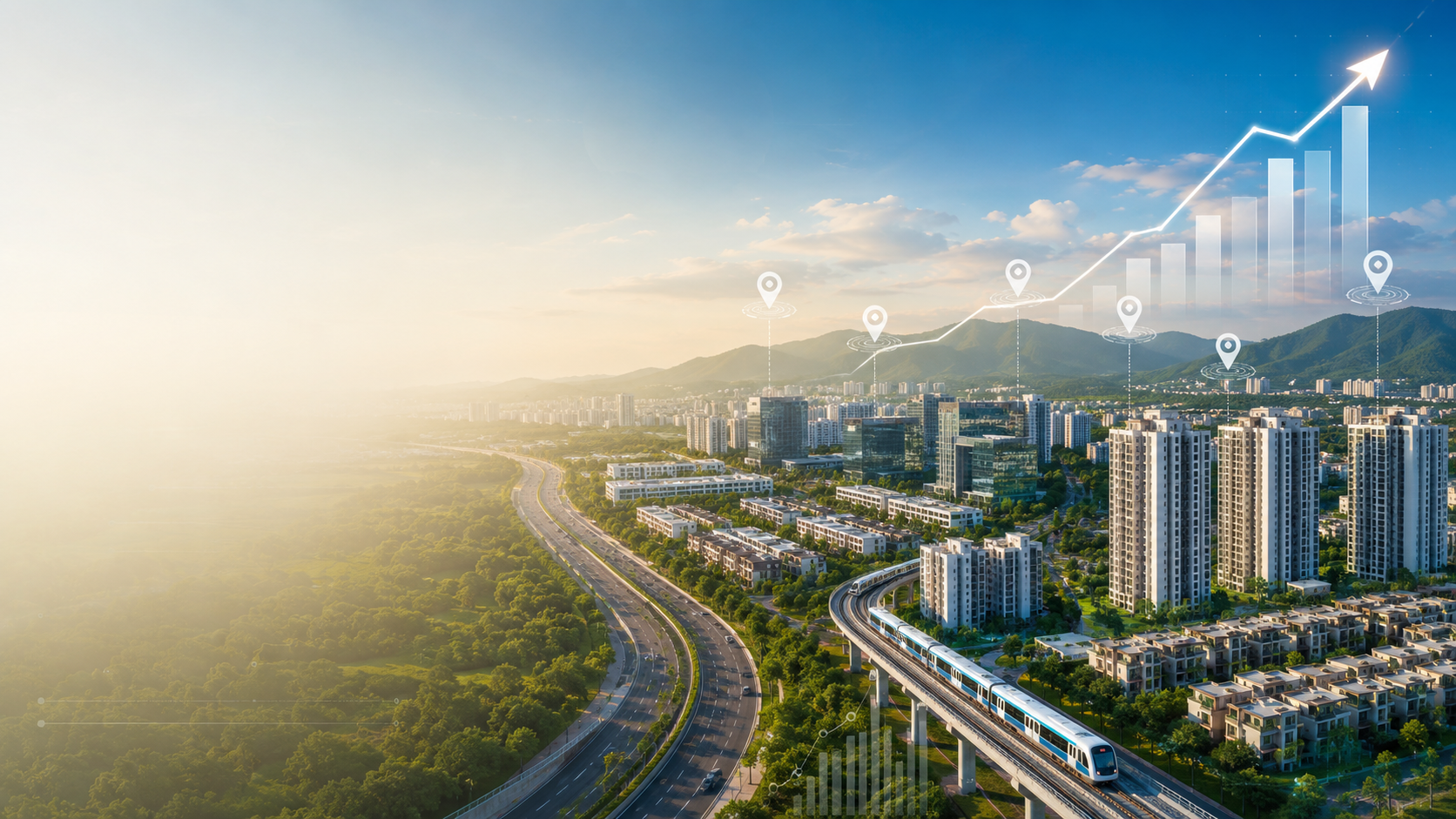
Infrastructure has always been one of the strongest catalysts for long-term real estate growth. Across India, landmark projects such as metro rail networks, expressways, airports, and ring roads have transformed how cities expand, where businesses invest, and which residential locations become the next growth corridors. While infrastructure alone does not guarantee higher property prices, it often improves accessibility, enhances economic activity, and increases the attractiveness of well-connected neighbourhoods over time.
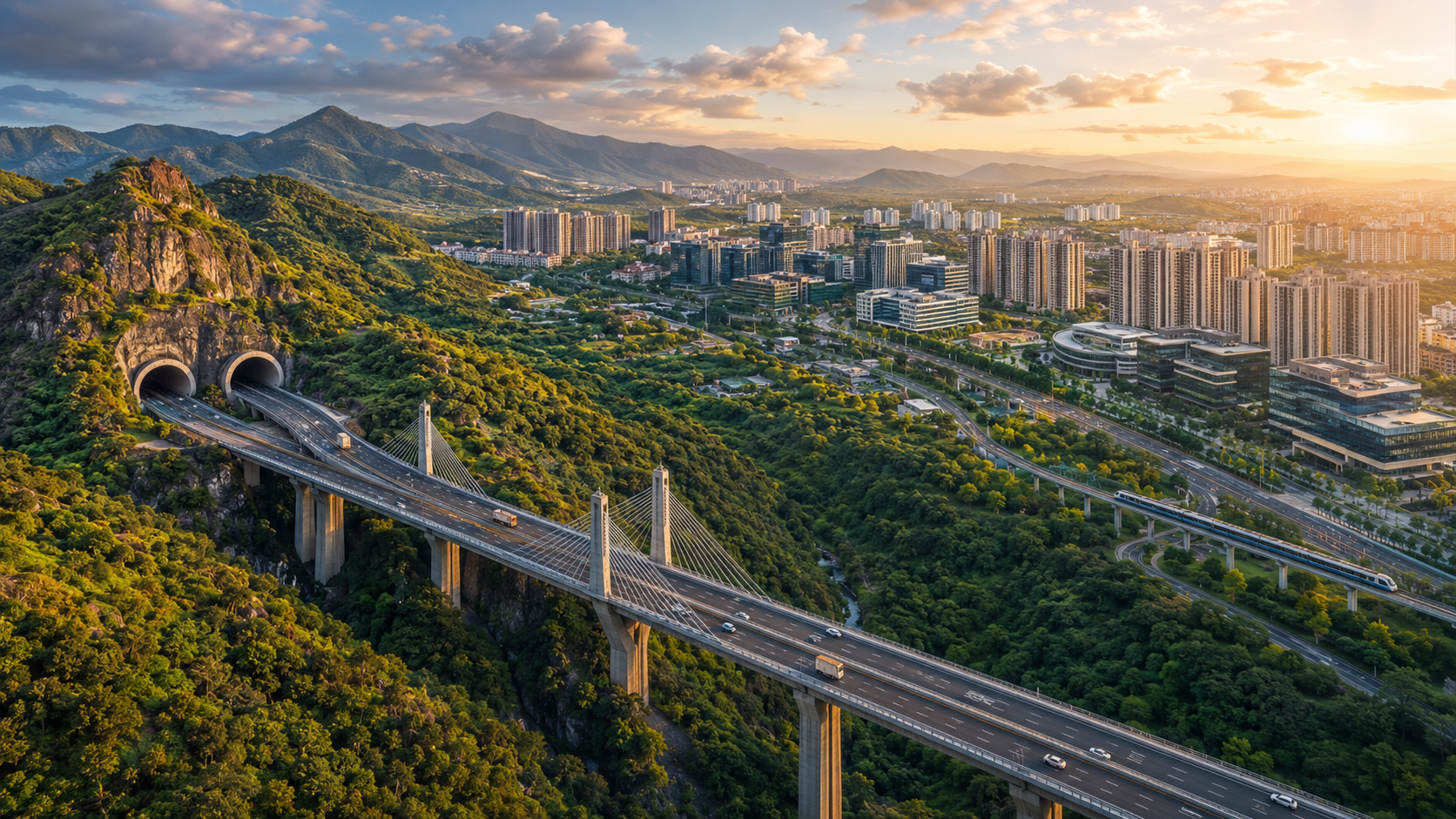
One of Maharashtra’s most ambitious road infrastructure projects is the **Mumbai–Pune Missing Link**, an upgrade to the Mumbai–Pune Expressway designed to improve travel efficiency, reduce congestion, and enhance safety. Rather than constructing an entirely new expressway, the project creates a shorter and more direct alignment by bypassing one of the most challenging sections of the existing route through a combination of long tunnels, major bridges, and modern engineering techniques.
For commuters, the benefits are expected to include faster and more reliable journeys between Mumbai and Pune. For businesses, improved connectivity may reduce logistics costs, strengthen supply chains, and support greater economic integration between two of India’s most important commercial centres. For homebuyers and investors, the project raises an important question:
**Could better connectivity reshape Pune’s real estate market over the next decade?**
The answer is nuanced. Property values are influenced by multiple factors, including employment growth, infrastructure, housing supply, financing costs, government policy, and buyer demand. Major infrastructure projects often create favourable conditions for development, but the degree of appreciation varies by location and market cycle. Understanding these dynamics is essential for making informed investment decisions.
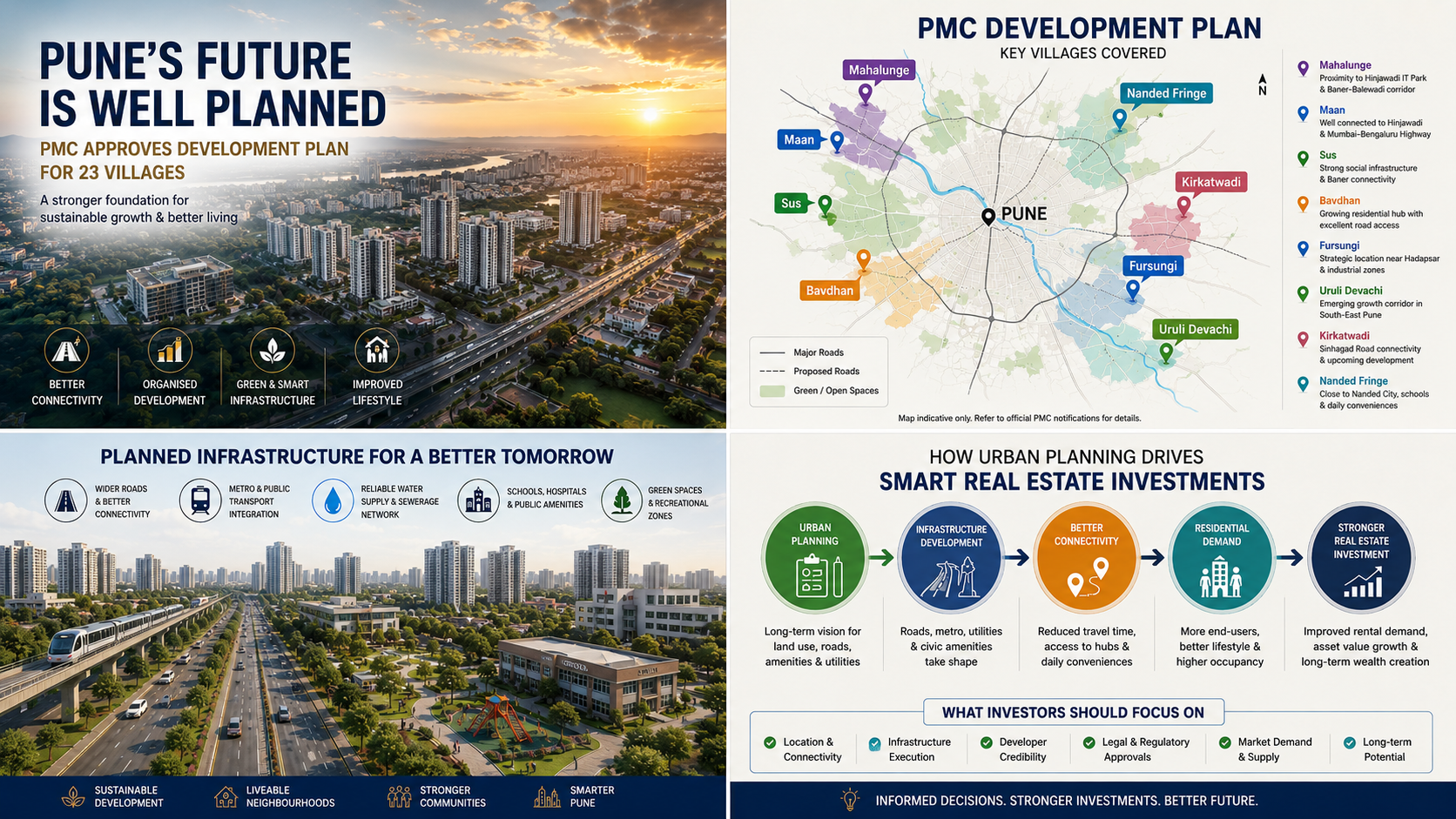
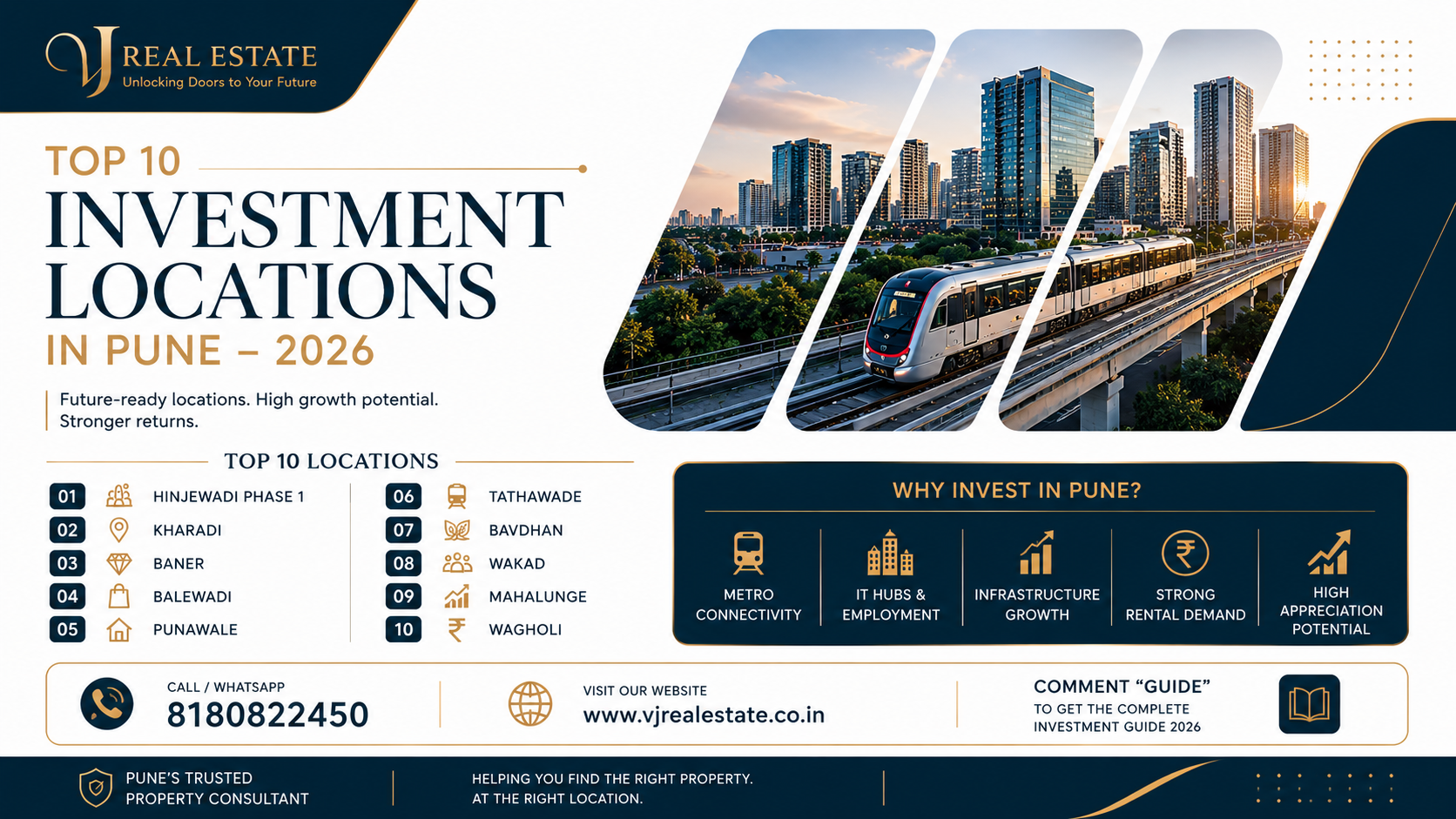
Pune has already established itself as one of India’s leading destinations for information technology, manufacturing, education, healthcare, and research. Locations such as Hinjawadi, Baner, Balewadi, Wakad, Tathawade, Punawale, Bavdhan, and Mahalunge continue to attract professionals, families, and investors because of their employment opportunities and improving urban infrastructure.
The Missing Link is expected to complement several other strategic developments across the Pune Metropolitan Region, including the Pune Metro expansion, the PMRDA Ring Road, airport infrastructure upgrades, and improved regional road networks. Together, these projects may strengthen Pune’s long-term competitiveness as a residential and commercial destination.
This guide explains what the Mumbai–Pune Missing Link is, how it is being developed, why transportation infrastructure influences real estate markets, and what buyers, investors, NRIs, and IT professionals should consider before making property decisions in Pune.
—
# Table of Contents
1. Introduction
2. What is the Mumbai–Pune Missing Link?
3. Project Alignment and Engineering Highlights
4. Current Development Status
5. Government Objectives
6. Why Infrastructure Influences Real Estate Prices
7. Lessons from Previous Infrastructure Projects
8. Infrastructure and West Pune’s Growth Story
9. Key Takeaways
—
# What Is the Mumbai–Pune Missing Link?
The Mumbai–Pune Missing Link is a major infrastructure improvement being developed on the Mumbai–Pune Expressway to enhance safety, reduce travel time, and improve overall traffic flow between Mumbai and Pune.
Instead of widening every section of the existing expressway, engineers identified a mountainous stretch where sharp curves, steep gradients, and traffic congestion reduced operational efficiency. The Missing Link creates a shorter alternative alignment that bypasses this section through tunnels and bridges, allowing vehicles to maintain more consistent speeds while improving road safety.
The project forms part of Maharashtra’s broader vision of strengthening connectivity between economic hubs, industrial clusters, logistics corridors, and rapidly growing urban regions.
Its primary objectives include:
* Improving travel efficiency between Mumbai and Pune.
* Reducing bottlenecks on the existing expressway.
* Enhancing road safety by avoiding difficult terrain.
* Supporting freight movement and logistics.
* Improving long-term regional connectivity.
* Accommodating future traffic growth.
Rather than serving only daily commuters, the project is expected to benefit passenger vehicles, commercial transport operators, tourism, manufacturing industries, and businesses that depend on efficient road infrastructure.
—
# Engineering Highlights
The Missing Link is regarded as one of India’s most technically challenging highway infrastructure projects because of the mountainous terrain it traverses.
Key engineering features include:
### Long Road Tunnels
A substantial portion of the route passes through tunnels constructed beneath the Sahyadri mountain range. These tunnels reduce travel distance while avoiding steep inclines and sharp curves.
Modern tunnel systems are designed with advanced ventilation, emergency exits, lighting, drainage, fire safety systems, and surveillance infrastructure to improve operational safety.
### Major Viaducts and Bridges
The project includes several high-level bridges and viaducts spanning valleys and uneven terrain. These structures minimise environmental disturbance while maintaining smooth road geometry.
### Reduced Travel Time
By shortening the route and improving alignment, the project aims to reduce travel time compared with the existing expressway under normal traffic conditions. Actual travel savings will depend on traffic volume, weather conditions, operating speeds, and future traffic management.
### Improved Road Safety
The redesigned alignment avoids several accident-prone sections of the existing route by reducing steep gradients and sharp bends.
### Advanced Construction Technology
Construction involves specialised tunnelling equipment, geological investigations, slope stabilisation techniques, and structural monitoring systems to address the challenges of mountainous terrain.
—
# Why Infrastructure Drives Real Estate Growth
Infrastructure changes how people live, work, and invest. When travel becomes faster and more predictable, locations that were once considered distant often become practical choices for homebuyers and businesses.
Several mechanisms explain this relationship:
### Improved Accessibility
Reduced travel time expands the number of locations from which people can comfortably commute to work. This increases demand for residential areas that offer better affordability while remaining connected to employment hubs.
### Business Expansion
Companies often prefer locations with strong transportation networks because efficient connectivity supports employees, customers, suppliers, and logistics operations. As commercial activity grows, demand for nearby housing frequently increases.
### Better Quality of Life
Improved infrastructure provides residents with greater convenience, shorter daily commutes, and easier access to schools, hospitals, shopping centres, and recreational facilities.
### Increased Investor Confidence
Large public infrastructure investments often signal long-term government commitment to regional development. While this does not guarantee property appreciation, it can encourage private investment in residential, commercial, and mixed-use projects.
### Employment Growth
Infrastructure projects create direct and indirect employment opportunities. Over time, expanding economic activity attracts additional businesses and supports housing demand.
—
# Historical Examples from Pune
Pune has experienced multiple phases of infrastructure-led urban growth.
When the Rajiv Gandhi Infotech Park in Hinjawadi expanded, nearby residential markets such as Wakad, Tathawade, Baner, and Balewadi witnessed significant housing development to serve the growing workforce.
Similarly, metro expansion has improved accessibility across several corridors, influencing buyer interest in locations with planned or operational stations.
The proposed PMRDA Ring Road is expected to strengthen east-west connectivity, while airport improvements aim to support business travel and regional economic growth.
The Mumbai–Pune Missing Link should be viewed within this broader context. It is one component of an interconnected infrastructure ecosystem that has the potential to improve mobility across western Maharashtra. Its impact on real estate will depend not only on the project itself but also on employment growth, urban planning, infrastructure completion, and broader economic conditions.
By understanding these relationships, buyers and investors can evaluate opportunities based on long-term fundamentals rather than short-term speculation.
Real Estate Impact, Area-Wise Analysis & Investment Opportunities
How the Mumbai–Pune Missing Link Could Benefit Pune
The Mumbai–Pune Missing Link is more than a highway engineering project—it is part of a broader infrastructure network that has the potential to improve mobility between Maharashtra’s two largest economic hubs. While the project’s primary objective is to enhance safety and reduce travel time on the Mumbai–Pune Expressway, its indirect effects may extend to commercial activity, residential demand, logistics, and regional development.
It is important to note that infrastructure projects **do not automatically increase property prices**. Appreciation depends on multiple variables, including employment growth, housing supply, affordability, government policies, interest rates, and buyer sentiment. However, improved connectivity often strengthens the long-term attractiveness of well-connected locations.
1. Stronger Mumbai–Pune Economic Corridor
Mumbai and Pune already share strong business ties across sectors such as:
* Information Technology
* Manufacturing
* Financial Services
* Automotive
* Education
* Healthcare
* Logistics
* Startups
A faster and more reliable road network can make intercity business travel more efficient and improve connectivity for companies operating across both cities.
2. Improved Logistics & Industrial Growth
Reduced travel time can improve logistics efficiency by lowering transportation delays and fuel consumption. Industrial areas around:
* Chakan
* Talegaon
* Pimpri-Chinchwad
* Hinjawadi
* Ranjangaon
may benefit from smoother freight movement, supporting business expansion over the long term.
3. Increased Demand for Residential Housing
As commercial activity expands, housing demand often follows. Employees typically seek homes near workplaces with convenient access to transportation infrastructure.
West Pune is already one of the city’s preferred residential corridors because of its proximity to IT parks, educational institutions, healthcare facilities, and lifestyle amenities.
4. Weekend Tourism & Second Homes
Improved expressway connectivity may also encourage more weekend travel between Mumbai and Pune. Locations near Lonavala, Somatane, Talegaon, and Pirangut may continue to attract buyers interested in holiday homes and second residences, depending on local market conditions.
Infrastructure Projects Creating a Combined Growth Effect
The Missing Link should not be viewed in isolation. Pune’s future growth is expected to be influenced by several infrastructure initiatives working together.
Pune Metro
The Pune Metro is improving urban mobility by connecting residential areas with employment centres. Better last-mile connectivity can increase the attractiveness of neighbourhoods located near metro stations.
Hinjawadi Metro
The proposed metro corridor connecting Hinjawadi with Shivajinagar is expected to improve public transport access for one of India’s largest IT hubs, benefiting both commuters and nearby residential developments.
PMRDA Ring Road
The Ring Road aims to reduce congestion within Pune while improving connectivity between suburban growth corridors. This can support balanced urban expansion and reduce dependence on the city centre.
Airport Infrastructure
Ongoing improvements to airport infrastructure are expected to strengthen domestic and international connectivity, making Pune more attractive for business travel and investment.
Industrial & Manufacturing Corridors
Industrial expansion around Chakan, Talegaon, and Pimpri-Chinchwad continues to generate employment, creating sustained demand for residential housing.
Pune Localities That May Benefit
The following comparison highlights key residential markets that could benefit from continued infrastructure development. Price ranges are indicative and should be verified at the time of purchase.
| Locality | Connectivity | Approx. Price Range (₹/sq.ft.) | Growth Drivers | Suitable Buyers |
| ——— | ———— | —————————–: | ——————————————- | ————————— |
| Hinjawadi | Excellent | 8,000–12,000 | IT Hub, Metro, Expressway | IT Professionals, Investors |
| Baner | Excellent | 11,000–16,000 | Premium Housing, Commercial Offices | Families, Professionals |
| Balewadi | Excellent | 10,000–15,000 | High-End Residential, Sports Infrastructure | Luxury Buyers |
| Wakad | Excellent | 8,500–12,500 | IT Connectivity | First-Time Buyers |
| Tathawade | Very Good | 7,500–11,000 | Education Hub | Young Families |
| Punawale | Very Good | 7,000–10,500 | Affordable Growth Corridor | Investors |
| Ravet | Good | 7,000–10,000 | Mumbai Connectivity | Families |
| Kiwale | Good | 6,500–9,500 | Infrastructure Expansion | Budget Buyers |
| Bavdhan | Excellent | 9,500–14,000 | Nature + City Access | Professionals |
| Sus | Excellent | 9,000–13,500 | Premium Residential | Upper-Mid Segment |
| Mahalunge | Excellent | 8,500–12,500 | Township Development | Investors |
| Mamurdi | Good | 6,500–9,500 | Township Growth | Long-Term Buyers |
| Somatane | Good | 6,000–8,500 | Expressway Access | Investors |
| Talegaon | Good | 5,500–8,500 | Industrial Expansion | Value Buyers |
| Pirangut | Moderate | 5,500–8,000 | Manufacturing & Future Growth | Long-Term Investors |
—
Area-Wise Investment Analysis
Hinjawadi
Hinjawadi remains Pune’s largest IT employment centre. The combination of the Hinjawadi Metro, expressway connectivity, and large-scale residential development positions it as one of the city’s strongest long-term residential markets.
Ideal for:
* IT Professionals
* Investors
* NRIs
* Rental Income
—
Baner
Baner has evolved into one of Pune’s premium residential destinations due to its commercial development, modern social infrastructure, and proximity to employment centres.
Key strengths include:
* High-quality schools
* Restaurants
* Healthcare
* Office spaces
* Premium residential projects
Balewadi
Balewadi offers a mix of luxury apartments and commercial developments. Its strategic location between Baner and Hinjawadi supports strong end-user demand.
Wakad
Wakad remains popular among first-time buyers because it offers comparatively affordable homes with convenient access to Hinjawadi and the Mumbai–Pune Expressway.
Tathawade
Tathawade has seen steady residential growth driven by educational institutions, improving road infrastructure, and expanding housing options.
Punawale
Punawale has emerged as one of West Pune’s fastest-growing residential markets due to comparatively affordable pricing, township developments, and connectivity improvements.
Ravet & Kiwale
Both locations attract buyers seeking better affordability while maintaining access to Mumbai and the Pimpri-Chinchwad employment corridor.
Bavdhan & Sus
These neighbourhoods appeal to professionals looking for a balance between urban convenience and greener surroundings. Improved road infrastructure has enhanced accessibility over the past decade.
Mahalunge
Mahalunge is benefiting from integrated township developments, commercial growth, and its strategic location near Baner and Hinjawadi.
Mamurdi & Somatane
These markets are gaining attention due to their proximity to the expressway, township projects, and relatively competitive property prices.
Talegaon
Talegaon benefits from industrial development, manufacturing activity, and educational institutions. It remains attractive for buyers seeking long-term value.
Pirangut
Pirangut continues to evolve with industrial expansion and improving connectivity. Buyers should evaluate project-specific factors, infrastructure availability, and long-term development plans before investing.
Which Property Types May Benefit?
Apartments
Suitable for:
* First-time buyers
* Salaried professionals
* Rental investors
Advantages:
* Strong resale demand
* Better financing options
* Lower maintenance compared to villas
Luxury Apartments
Premium residential projects in Baner, Balewadi, Bavdhan, and Sus may continue to attract high-income professionals and senior executives seeking lifestyle amenities and convenient access to commercial districts.
Villas
Villa developments near Pirangut, Talegaon, Somatane, and selected township projects appeal to buyers looking for larger living spaces and long-term lifestyle investments.
Plotted Developments
Plots may offer flexibility for future construction but typically require careful due diligence regarding zoning, approvals, and infrastructure availability.
Commercial Offices
Demand for commercial office space depends largely on business expansion, employment generation, and occupancy trends. Locations near established IT hubs generally remain preferred by occupiers.
Retail Spaces
Retail investments often perform best in densely populated residential neighbourhoods with established footfall rather than relying solely on infrastructure announcements.
Warehousing & Logistics
Improved expressway connectivity can support logistics operations over time. Industrial and warehouse demand, however, depends on broader manufacturing activity, supply chain requirements, and land availability.
Key Takeaways
* The Mumbai–Pune Missing Link is expected to improve regional connectivity rather than directly determine property prices.
* West Pune remains one of the strongest residential corridors due to employment opportunities, social infrastructure, and ongoing transport investments.
* Buyers should evaluate projects based on location, developer reputation, construction quality, legal approvals, and long-term livability.
* Infrastructure is one of several factors influencing property values, alongside economic growth, housing supply, and buyer demand.
* Long-term investment decisions should be guided by research and financial planning rather than expectations of guaranteed appreciation.
Property Market Outlook, FAQs, Conclusion & SEO Assets
Property Price Outlook: A Scenario-Based Analysis
One of the most common questions among homebuyers is whether the Mumbai–Pune Missing Link will increase property prices in Pune. While major infrastructure projects often improve the long-term attractiveness of an area, no infrastructure project can guarantee property appreciation. Real estate values are influenced by a combination of employment growth, housing supply, interest rates, economic conditions, and the timely completion of infrastructure.
The table below presents a scenario-based assessment rather than a prediction or guarantee.
Locality Current Market Trend 5-Year Growth Drivers Key Risks
Hinjawadi Strong end-user demand IT expansion, Metro, Expressway connectivity New supply entering the market
Baner Mature premium market Commercial growth, limited land availability Higher entry prices
Balewadi Stable premium demand Luxury housing, business districts Slower appreciation if supply increases
Wakad Consistent demand IT workforce, metro connectivity Competitive inventory
Tathawade Emerging residential hub Educational institutions, infrastructure Project execution timelines
Punawale Growing market Affordable pricing, township projects Large future supply
Ravet Stable demand Expressway access, family housing Local infrastructure pace
Kiwale Developing corridor Road connectivity, affordability Longer development horizon
Bavdhan Premium residential Western bypass connectivity Premium pricing
Sus Upscale housing Lifestyle developments Limited inventory in some segments
Mahalunge High-growth potential Township developments Dependent on infrastructure completion
Mamurdi Emerging township Expressway and industrial growth Slower absorption
Somatane Long-term potential Improved connectivity Early-stage development
Talegaon Industrial-driven demand Manufacturing employment Economic cycles
Pirangut Industrial growth Manufacturing corridor Infrastructure availability
Important: Buyers should evaluate each project individually. Infrastructure projects are only one factor influencing future market performance.
Who Should Consider Investing?
First-Time Homebuyers
If you are purchasing your first home, prioritize:
Daily commute
Budget
Builder reputation
Ready social infrastructure
Long-term affordability
Areas such as Wakad, Punawale, Tathawade, Ravet, and Kiwale often offer a balance between affordability and connectivity.
IT Professionals
Professionals working in Hinjawadi, Baner, or Balewadi may benefit from living closer to employment hubs to reduce commuting time. Upcoming metro connectivity could further improve accessibility.
Long-Term Investors
Investors should focus on:
Employment growth
Infrastructure pipeline
Rental demand
Reputed developers
Upcoming commercial developments
Long-term investment decisions should be based on diversified research rather than short-term market speculation.
NRIs
For NRIs looking to invest in Pune, important considerations include:
Legal verification
MahaRERA registration
Property management
Rental potential
Developer track record
Families
Families generally prioritize:
Schools
Hospitals
Parks
Public transport
Safety
Community amenities
Integrated townships and well-established residential neighborhoods often provide these benefits.
Retirees
Retirees may prefer locations that offer:
Peaceful surroundings
Healthcare access
Low maintenance
Daily convenience
Good road connectivity
Risks to Consider Before Investing
Every real estate investment carries risks. Buyers should carefully assess:
Construction Delays
Infrastructure and residential projects may experience delays due to approvals, weather, financing, or technical challenges.
Interest Rate Changes
Higher home loan interest rates can affect affordability and buyer demand.
Market Cycles
Real estate markets move through expansion, stabilization, and correction phases. Short-term fluctuations are normal.
Oversupply
Areas with significant new launches may experience increased competition, which can influence pricing and rental yields.
Regulatory Changes
Government policies, taxation, zoning regulations, and development plans can affect property markets.
Personal Financial Planning
Never purchase property solely because of infrastructure announcements. Ensure that the investment aligns with your financial goals, risk tolerance, and long-term needs.
Frequently Asked Questions (FAQs)
1. What is the Mumbai–Pune Missing Link?
It is a major upgrade to the Mumbai–Pune Expressway designed to improve safety, reduce travel time, and bypass a difficult mountainous section using tunnels and bridges.
2. Will it reduce travel time?
The project is intended to shorten the route and improve traffic flow. Actual travel time savings will depend on traffic conditions and operational factors.
3. Will Pune property prices increase?
Improved infrastructure can support long-term demand, but property prices also depend on employment, supply, interest rates, and overall market conditions.
4. Which Pune areas could benefit the most?
Locations with strong employment bases and good connectivity, such as Hinjawadi, Baner, Balewadi, Wakad, Tathawade, Punawale, Bavdhan, Sus, and Mahalunge, may continue to attract buyers.
5. Is this a good time to buy property in Pune?
The answer depends on your budget, financial goals, and preferred location. Long-term buyers often benefit from purchasing properties that meet their lifestyle needs rather than trying to time the market.
6. Is infrastructure alone enough to guarantee appreciation?
No. Infrastructure is one of several factors that influence property values.
7. Is West Pune still a good investment destination?
West Pune continues to attract homebuyers because of its employment opportunities, educational institutions, healthcare facilities, and improving infrastructure.
8. Should I buy under-construction or ready-possession property?
Each option has advantages. Ready-possession homes eliminate construction risk, while under-construction properties may offer phased payment plans.
9. How important is MahaRERA registration?
Buying a MahaRERA-registered project helps improve transparency and provides buyers with access to project information.
10. Which property type offers better long-term value?
The answer depends on your objectives. Apartments, villas, plots, and commercial properties each have different risk and return characteristics.
Conclusion
The Mumbai–Pune Missing Link represents an important step toward improving regional connectivity between two of India’s most significant economic centers. By enhancing travel efficiency and supporting the broader transportation network, the project has the potential to strengthen Pune’s long-term appeal for residents, businesses, and investors.
However, infrastructure should be viewed as one element of a comprehensive investment decision, not as a guarantee of future price appreciation. Successful property investments are typically based on a combination of location, employment growth, developer credibility, legal compliance, project quality, and long-term financial planning.
For buyers considering property in West Pune, localities such as Hinjawadi, Baner, Balewadi, Wakad, Tathawade, Punawale, Bavdhan, Sus, Mahalunge, Mamurdi, Ravet, and Kiwale continue to offer diverse opportunities across different budgets and buyer profiles. Evaluating each project on its own merits remains essential.
As Pune continues to evolve through ongoing investments in roads, metro connectivity, industrial corridors, and urban infrastructure, informed decision-making will be the key to identifying opportunities that align with your personal and financial goals.
About VJ Real Estate
At VJ Real Estate, we help homebuyers and investors make informed property decisions through transparent guidance, local market expertise, and access to carefully selected residential projects across Pune.
Whether you are searching for your first home, a luxury apartment, an investment property, or a ready-possession residence, our team is committed to helping you identify options that match your requirements.
We Can Help You With:
Property Investment Advisory
Site Visits
New Launch Projects
Ready Possession Homes
Luxury Apartments
Township Projects
Builder Comparisons
Home Loan Assistance
End-to-End Buying Support
Visit: https://www.vjrealestate.co.in