Introduction
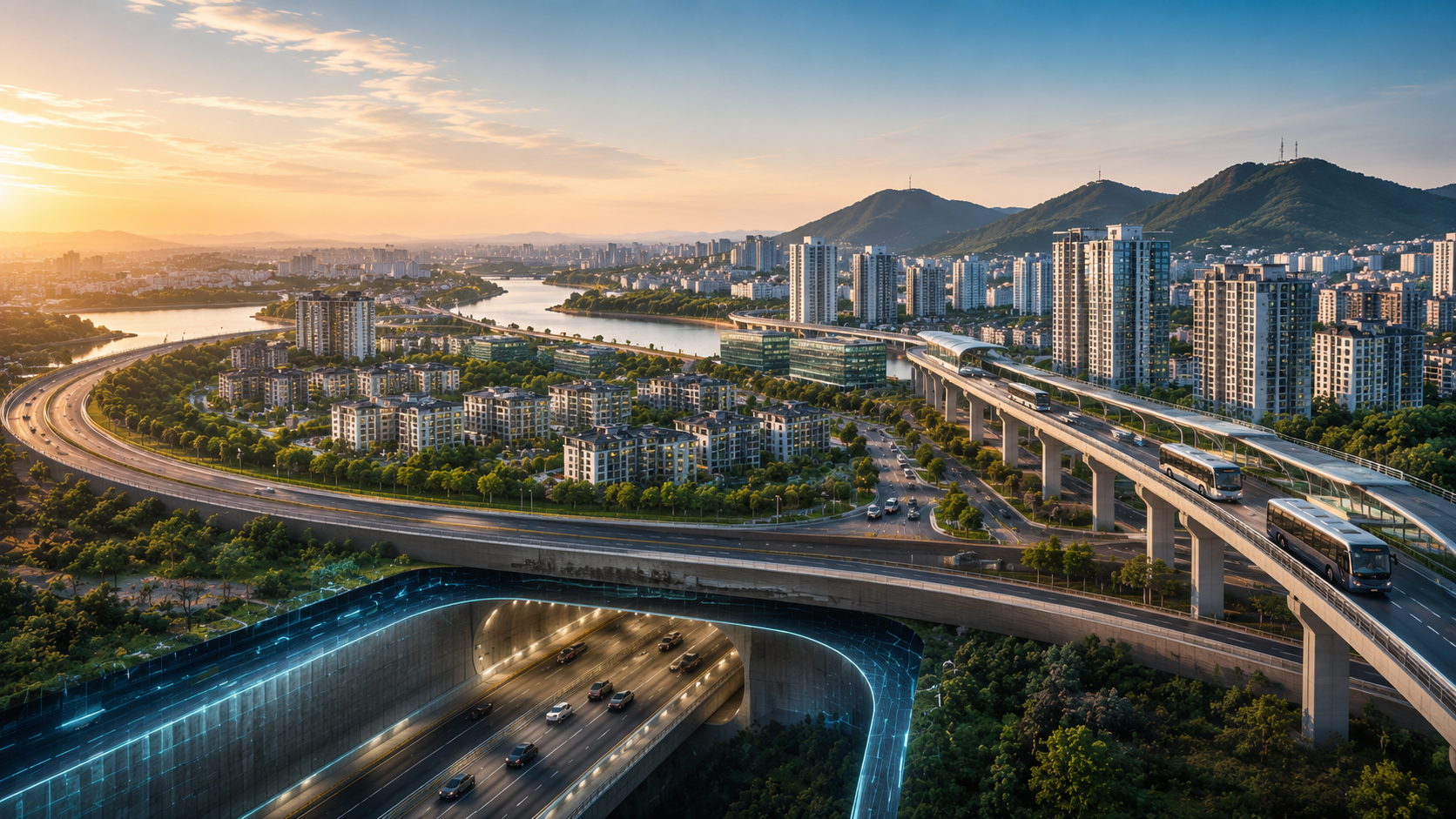
For years, Pune has been celebrated as one of India’s fastest-growing cities. It is home to thriving IT parks, globally recognized educational institutions, a vibrant startup ecosystem, and rapidly expanding residential corridors. However, alongside this growth has come one of the city’s biggest challenges—traffic congestion.
Daily commuters travelling between Hinjawadi, Baner, Balewadi, Wakad, Kothrud, Aundh, Shivajinagar, and Pune Camp often spend significantly more time on the road than expected during peak hours. Increasing private vehicle ownership, expanding residential townships, and infrastructure struggling to keep pace have made congestion a routine part of life for many residents.
Recognizing these challenges, the Maharashtra Government has announced a coordinated strategy aimed at improving mobility across the Pune Metropolitan Region (PMR). The plan focuses on three major infrastructure initiatives:
Underground Tunnel Network
High Capacity Mass Transit Route (HCMTR)
Pune Inner Ring Road
To accelerate decision-making and coordination, the state has constituted a high-level committee chaired by Chief Minister Devendra Fadnavis. The committee is expected to streamline planning across departments and help move these long-pending projects toward implementation.
For homebuyers and property investors, these announcements are relevant not only because of transportation improvements but also because major infrastructure projects can reshape accessibility, influence commuting patterns, and affect the long-term attractiveness of different residential locations. The extent of any impact on property values will depend on execution, timelines, market conditions, and broader economic factors.
This guide explains what has been announced, how each project fits into Pune’s broader transport strategy, and what it could mean for homebuyers, investors, and residents.
Table of Contents
Quick Overview
What Has the Maharashtra Government Announced?
Pune Tunnel Project Explained
Understanding HCMTR
Pune Inner Ring Road
Why Pune Needs These Projects
Expected Impact on Daily Commuting
Real Estate Implications
Opportunities and Risks
Locality-wise Investment Outlook
Frequently Asked Questions.
Quick Summary
| Project | Approx. Length | Current Stage (2026) | Expected Benefit | Lead Authority |
| ——————– | ————-: | ————————————- | ——————————————————– | —————————- |
| Pune Tunnel Network | ~64 km | Planning & alignment review | Reduce congestion and travel time | Maharashtra Government / PMC |
| HCMTR | ~43.6 km | Proposed with implementation planning | High-capacity urban mobility integrated with Metro | PMC |
| Pune Inner Ring Road | ~86 km | PMRDA planning & land acquisition | Divert through traffic and improve regional connectivity | PMRDA |
Project lengths, timelines, and alignments are subject to revision as detailed project reports and government approvals progress.
What Was Announced?
The Maharashtra Government has decided to give higher priority to several long-pending transportation projects that are intended to improve mobility across Pune and Pimpri-Chinchwad.
The announcement includes the formation of a high-level coordination committee under Chief Minister Devendra Fadnavis to facilitate planning and execution.
Objectives
The government’s stated goals include:
Improving east-west connectivity.
Reducing congestion on major arterial roads.
Enhancing regional connectivity.
Integrating future transport systems.
Supporting Pune’s long-term urban growth.
Rather than viewing these as standalone projects, the government is positioning them as complementary components of a broader transport network.
Government Departments Involved
Several agencies are expected to coordinate on these projects, including:
Maharashtra Government
Pune Municipal Corporation (PMC)
Pimpri Chinchwad Municipal Corporation (PCMC)
Pune Metropolitan Region Development Authority (PMRDA)
Maharashtra Public Works Department (PWD)
Maharashtra Metro Rail Corporation (where integration is required)
This multi-agency coordination is important because delays in large infrastructure projects often arise from overlapping responsibilities, land acquisition, environmental approvals, and utility relocation.
Pune Tunnel Project Explained
What Is the Pune Tunnel Project?
The proposed tunnel network aims to create underground road corridors that bypass heavily congested surface roads. By allowing traffic to travel beneath densely developed areas, the tunnels are intended to reduce bottlenecks and improve journey reliability.
According to current planning, the network could extend approximately 64 kilometres across multiple corridors. Final alignments remain subject to technical studies and government approvals.
Proposed Objectives
The tunnel network is intended to:
Reduce travel time.
Ease congestion at key intersections.
Improve connectivity between western Pune and central business districts.
Lower pressure on existing road infrastructure.
Provide alternative routes during peak traffic periods.
Proposed Corridors
Initial planning includes connectivity involving areas such as:
Baner
Aundh
Pashan
Bavdhan
Kothrud
Khadki
Sangamwadi
Sinhagad Road
Jagtap Dairy
The exact routes may change after detailed engineering surveys and environmental assessments.
Engineering Challenges
Urban tunnel construction involves complex engineering considerations, including:
Geological investigations.
Groundwater management.
Utility relocation.
Ventilation systems.
Emergency exits.
Fire safety infrastructure.
Intelligent traffic management systems.
Each of these elements must comply with national safety standards before construction can begin.
Potential Benefits
If completed as planned, the tunnel network may:
Improve journey reliability.
Reduce stop-and-go traffic.
Support emergency vehicle movement.
Reduce pressure on surface intersections.
Improve connectivity between residential and employment hubs.
However, these outcomes depend on successful implementation and integration with the broader road network.
Understanding HCMTR (High Capacity Mass Transit Route)
What Is HCMTR?
The High Capacity Mass Transit Route (HCMTR) is a long-planned urban mobility corridor proposed by the Pune Municipal Corporation. It is designed to function as a high-capacity transport spine that connects different parts of the city while integrating with existing and future Metro lines.
Unlike conventional roads that primarily serve mixed traffic, the HCMTR concept focuses on efficient movement across the city with dedicated planning for public transport and multimodal connectivity.
Key Features
Approximate length of 43.6 km
Designed as an elevated mobility corridor in many sections
Integration with Metro stations where feasible
Intended to improve east-west and north-south connectivity
Planned to reduce dependency on already congested arterial roads
Difference Between HCMTR and Ring Road
| HCMTR | Inner Ring Road |
| —————————- | —————————- |
| Urban mobility corridor | Regional traffic corridor |
| Focuses on city connectivity | Diverts through traffic |
| Metro integration | Road-based connectivity |
| Supports intra-city movement | Supports inter-city movement |
Both projects address different transportation challenges and are intended to complement each other.
Expected Advantages
Potential benefits include:
Faster public transport integration.
Improved connectivity between business districts.
Better access to Metro stations.
Reduced travel time for commuters.
More efficient traffic distribution.
Pune Inner Ring Road
Purpose
The proposed Inner Ring Road is intended to redistribute traffic moving across Pune without requiring vehicles to pass through already congested city centres.
It complements the larger regional road network and is expected to improve connectivity between Pune and Pimpri-Chinchwad.
Key Highlights
Approximate length: 86 km
Planned by PMRDA
Intended to improve regional connectivity
Designed to divert heavy through traffic
Supports future urban expansion
Why Is It Important?
Currently, many vehicles travelling between different suburbs must use roads that also serve local neighbourhood traffic. The Inner Ring Road aims to reduce this overlap by providing alternative routes for longer-distance travel.
Potential outcomes include:
Reduced congestion on internal roads.
Better freight movement.
Improved travel reliability.
Enhanced connectivity between emerging residential areas.
Land Acquisition
One of the most significant challenges will be land acquisition. The government has indicated that compensation mechanisms will be used, but timelines and execution will depend on negotiations, approvals, and administrative processes.
Why These Projects Matter
Pune’s Rapid Growth
Pune has expanded significantly over the past two decades, driven by:
Growth of the IT and technology sector.
Expansion of higher education.
Industrial development.
Migration from other cities.
Development of large residential townships.
As employment centres have expanded, residential growth has followed, creating longer commuting distances for many households.
Increasing Vehicle Ownership
Like many growing metropolitan areas, Pune has experienced a steady rise in private vehicle ownership. This has increased pressure on intersections, arterial roads, and existing flyovers.
While road widening has provided some relief in certain corridors, long-term congestion requires a combination of road infrastructure, public transport integration, and improved traffic management.
Importance for Homebuyers and Investors
Transport infrastructure often influences how accessible a location becomes over time. Better connectivity can improve convenience, support economic activity, and shape residential demand.
However, infrastructure alone does not guarantee property appreciation. Factors such as employment growth, housing supply, civic amenities, and overall market conditions also play a significant role.
For buyers evaluating locations such as Baner, Wakad, Hinjawadi, Punawale, Bavdhan, or Tathawade, monitoring the progress of these infrastructure projects can provide useful context alongside other investment considerations.
Real Estate Impact: How the Tunnel Project, HCMTR & Inner Ring Road Could Influence Pune’s Property Market
Why Infrastructure Matters in Real Estate
Infrastructure has historically been one of the strongest long-term drivers of residential and commercial real estate demand. While infrastructure alone does not guarantee property appreciation, it often improves accessibility, expands employment catchments, and increases the attractiveness of emerging locations.
Examples across India include:
The Mumbai Metro improving accessibility across western suburbs.
Hyderabad’s Outer Ring Road supporting growth in Gachibowli and Kokapet.
Bengaluru’s metro expansion increasing interest in Whitefield and Electronic City.
Pune is following a similar trajectory, with multiple transport projects planned alongside continued IT and residential expansion.
Expert Note: Property appreciation depends on multiple factors, including project execution, employment growth, housing supply, interest rates, and broader economic conditions. The observations below are investment perspectives—not guarantees of future price growth.
Locality-Wise Analysis
1. Baner
Current Market Snapshot (2026)
| Factor | Overview |
| ——————- | ——————————————- |
| Residential Profile | Premium residential and commercial hub |
| Buyer Segment | IT professionals, CXOs, investors, families |
| Connectivity | Mumbai-Bengaluru Highway, Baner Road, Aundh |
| Rental Demand | High |
| Investment Horizon | Long-term |
Infrastructure Impact
Baner is likely to remain one of Pune’s most strategically connected locations if proposed tunnel corridors and HCMTR integration progress as planned. Improved connectivity toward Shivajinagar, Kothrud, and central Pune could further strengthen its appeal for professionals working in IT and corporate hubs.
Who Should Consider Baner?
End-users seeking premium urban living.
Investors focused on rental demand.
Professionals employed in Baner, Hinjawadi, or Aundh.
2. Balewadi
Market Position
Balewadi has evolved from a sports-centric suburb into a mixed-use residential destination with strong demand for premium apartments.
Potential Impact
Better regional connectivity.
Reduced travel times to Hinjawadi and central Pune.
Continued demand from IT professionals.
Investment Outlook
Strong long-term fundamentals supported by existing social infrastructure, commercial growth, and proximity to Baner.
3. Bavdhan
Why Buyers Like Bavdhan
Proximity to Kothrud and Chandani Chowk.
Access to educational institutions.
Green surroundings compared with denser urban areas.
Infrastructure Influence
If western tunnel connectivity improves, commuting from Bavdhan toward central Pune could become more efficient, increasing its attractiveness for homebuyers prioritizing a balance between accessibility and lifestyle.
Ideal Buyers
Families.
First-time buyers upgrading from apartments in central Pune.
Long-term investors.
4. Pashan
Pashan benefits from its location between Baner, Aundh, Bavdhan, and the university area.
Potential advantages include:
Better access to employment hubs.
Strong rental demand from professionals.
Improved east-west mobility if tunnel connectivity is implemented.
Its established residential character may help sustain demand over the long term.
5. Aundh
Market Characteristics
Aundh remains one of Pune’s mature premium residential locations.
Strengths include:
Established civic infrastructure.
Schools and hospitals.
Retail and lifestyle amenities.
Strong resale market.
Infrastructure Outlook
Rather than creating a new market, improved transport is more likely to enhance convenience and reinforce Aundh’s existing desirability.
6. Kothrud
Kothrud is among Pune’s oldest planned residential areas and continues to attract families due to its social infrastructure and connectivity.
Potential Benefits
Reduced congestion toward western Pune.
Faster access to Baner and Hinjawadi.
Better integration with future transport corridors.
Investor Perspective
Limited new supply compared with emerging suburbs may support long-term demand, though pricing is already relatively mature.
7. Wakad
Why Wakad Continues to Grow
Wakad has become one of Pune’s largest residential markets because of:
Hinjawadi proximity.
Strong apartment supply.
Metro connectivity improvements.
Good highway access.
Impact of New Infrastructure
Future road improvements could:
Improve connectivity with Baner.
Reduce bottlenecks.
Enhance regional accessibility.
Suitable Buyers
IT professionals.
First-home buyers.
Investors seeking rental income.
8. Hinjawadi
Pune’s Largest IT Employment Hub
Hinjawadi continues to be one of the city’s biggest employment generators.
Demand comes from:
Software professionals.
Global capability centers.
Technology companies.
Start-ups.
Infrastructure Relevance
Improved road connectivity, HCMTR integration, and future Metro connectivity collectively have the potential to improve commuting options.
However, because Hinjawadi’s traffic challenges stem from both infrastructure and employment concentration, benefits will depend on integrated planning rather than any single project.
9. Punawale
Punawale has transformed into a preferred destination for buyers seeking newer developments at comparatively competitive price points.
Strengths
Access to Mumbai Expressway.
Connectivity to Wakad and Hinjawadi.
Growing educational infrastructure.
Expanding retail ecosystem.
Long-Term Outlook
Improved regional road infrastructure could further strengthen Punawale’s position as a residential growth corridor.
10. Tathawade
Emerging Education & IT Corridor
Tathawade combines:
Educational institutions.
Residential townships.
IT accessibility.
Highway connectivity.
Infrastructure improvements could support continued demand from first-time buyers and investors targeting professionals.
11. Mamurdi
Mamurdi has attracted attention due to:
Township developments.
Competitive pricing.
Connectivity improvements.
Future regional transport projects could improve accessibility, although investment outcomes will depend on execution and surrounding infrastructure.
12. Mahalunge
Mahalunge is strategically positioned between Baner, Balewadi, and Hinjawadi.
Major advantages include:
Proximity to commercial hubs.
Planned urban development.
Access to major road corridors.
Improved connectivity may reinforce its position as a premium growth market over the coming years.
13. Sus
Sus has emerged as an attractive residential option for buyers seeking relatively quieter neighborhoods with access to western Pune.
Potential infrastructure improvements could:
Reduce travel times.
Increase accessibility.
Support gradual residential demand.
Comparative Locality Snapshot
| Locality | Connectivity | Rental Demand | Investment Outlook | Buyer Profile |
| ——— | ———— | ————- | —————— | ————————- |
| Baner | Excellent | High | Strong | Premium buyers, investors |
| Balewadi | Excellent | High | Strong | Professionals, families |
| Bavdhan | Good | Moderate | Positive | Families |
| Aundh | Excellent | High | Stable | End-users |
| Kothrud | Excellent | High | Stable | Premium families |
| Wakad | Very Good | High | Strong | IT professionals |
| Hinjawadi | Very Good | Very High | Strong | Investors, IT workforce |
| Punawale | Good | Growing | Positive | First-home buyers |
| Tathawade | Good | Growing | Positive | Young professionals |
| Mamurdi | Moderate | Growing | Emerging | Budget buyers |
| Mahalunge | Very Good | Growing | Strong | Long-term investors |
| Sus | Good | Moderate | Positive | Families |
Infrastructure Investment Scorecard
| Factor | Rating |
| ————————— | —— |
| Connectivity Potential | ★★★★★ |
| Metro Integration | ★★★★☆ |
| Economic Impact | ★★★★★ |
| Residential Demand | ★★★★☆ |
| Commercial Growth | ★★★★★ |
| Investment Opportunity | ★★★★☆ |
| Execution Risk | ★★★☆☆ |
| Land Acquisition Complexity | ★★★★☆ |
| Environmental Approvals | ★★★☆☆ |
| Long-Term Outlook | ★★★★★ |
Opportunities for Homebuyers
Better future connectivity.
Larger choice of residential locations.
Reduced dependence on a single employment corridor.
Improved access to schools, hospitals, and business districts.
Potential for stronger rental demand in well-connected areas.
Risks and Challenges
While the proposed projects are ambitious, several factors could influence their eventual impact:
1. Land Acquisition
Acquiring land in urban areas can be time-consuming and may affect project schedules.
2. Funding
Large-scale transport infrastructure requires sustained financial commitment over multiple years.
3. Environmental Clearances
Projects involving tunnels and new road corridors may require environmental studies and statutory approvals.
4. Construction Timelines
Complex engineering works often experience revisions in schedules due to technical, regulatory, or logistical factors.
5. Coordination Across Agencies
Successful implementation will depend on effective collaboration between the Maharashtra Government, PMRDA, PMC, PCMC, and other agencies.
Comparing Pune with Other Indian Infrastructure Projects
| City | Project | Key Outcome | Lesson for Pune |
| ——— | ——————– | ————————————— | ——————————————- |
| Mumbai | Coastal Road | Reduced travel time on western corridor | Integrate roads with public transport |
| Hyderabad | Outer Ring Road | Catalyzed suburban growth | Plan growth alongside infrastructure |
| Bengaluru | Peripheral Ring Road | Ongoing regional connectivity project | Ensure timely execution |
| Delhi | Ring Road Network | Better traffic distribution | Manage freight and urban traffic separately |
| Nagpur | Metro | Improved public transport integration | Strengthen multimodal connectivity |
Frequently Asked Questions (FAQs)
1. What is the Pune Traffic Relief Plan announced in 2026?
The Pune Traffic Relief Plan is a coordinated infrastructure initiative by the Maharashtra Government focusing on three major transportation projects: the proposed underground tunnel network, the High Capacity Mass Transit Route (HCMTR), and the Pune Inner Ring Road. The objective is to improve connectivity, reduce congestion, and support long-term urban growth.
2. What is the Pune Tunnel Project?
The Pune Tunnel Project is a proposed network of underground road corridors intended to bypass heavily congested surface roads and improve travel between key parts of western and central Pune.
3. How long is the proposed tunnel network?
Current government planning refers to approximately 64 km of tunnel corridors. Final alignments and lengths remain subject to detailed project reports (DPRs) and statutory approvals.
4. What is HCMTR?
HCMTR (High Capacity Mass Transit Route) is a planned high-capacity urban mobility corridor designed to improve intra-city connectivity while integrating with Pune Metro and other transport systems.
5. How long is the HCMTR?
The proposed HCMTR is approximately 43.6 km long.
6. What is the Pune Inner Ring Road?
The Inner Ring Road is an approximately 86 km road network proposed by PMRDA to divert through traffic away from congested urban roads and improve regional connectivity.
7. Which government agencies are involved?
The projects involve multiple agencies, including:
Maharashtra Government
PMRDA
Pune Municipal Corporation (PMC)
Pimpri Chinchwad Municipal Corporation (PCMC)
Public Works Department (PWD)
Other relevant planning and transport authorities
8. Why does Pune need these projects?
Pune has experienced rapid population growth, expansion of IT employment hubs, increased vehicle ownership, and urban development, all of which have placed significant pressure on the city’s road network.
9. Will these projects reduce traffic immediately?
No. The announced projects are in various planning and implementation stages. Any measurable traffic benefits will depend on approvals, construction progress, and eventual completion.
10. Will travel time reduce?
The objective is to improve travel efficiency and reduce congestion. The extent of travel time savings will depend on completed alignments, traffic management, and integration with other transport systems.
11. Which areas could benefit from improved connectivity?
Potentially affected areas include:
Baner
Balewadi
Bavdhan
Aundh
Kothrud
Pashan
Wakad
Hinjawadi
Punawale
Tathawade
Mahalunge
Mamurdi
Sus
12. Will property prices increase?
Improved infrastructure can enhance the attractiveness of an area, but property prices are influenced by multiple factors including housing supply, employment growth, interest rates, civic amenities, and overall market conditions. No appreciation is guaranteed.
13. Is Baner a good investment after this announcement?
Baner already benefits from strong demand, commercial activity, and established infrastructure. Improved connectivity may strengthen its long-term appeal, subject to project execution.
14. Is Hinjawadi likely to benefit?
Hinjawadi’s position as a major IT hub means better transport infrastructure could improve commuting options. However, traffic improvements will depend on coordinated implementation across multiple projects.
15. Should first-time buyers consider Punawale or Tathawade?
These locations continue to attract first-time buyers because of comparatively newer housing stock, improving connectivity, and proximity to employment corridors. Buyers should evaluate project quality, pricing, and personal requirements before making a decision.
16. Will Metro connectivity improve alongside these projects?
The HCMTR is intended to complement Pune Metro where feasible, supporting a more integrated transport network.
17. What challenges could delay implementation?
Key challenges include land acquisition, environmental clearances, utility relocation, funding, and coordination between multiple government agencies.
18. Are these projects officially approved?
The government has announced the initiative and established a coordination mechanism. Individual components will continue to require detailed planning, statutory approvals, and phased implementation.
19. Is the Inner Ring Road different from the Pune Ring Road?
Yes. The proposed Inner Ring Road is distinct from the larger regional Ring Road project. Each serves different mobility objectives.
20. Will these projects improve connectivity to the Mumbai Expressway?
Some western Pune corridors could experience improved connectivity depending on final alignments and integration with existing highways.
21. Are these projects expected to support commercial development?
Improved accessibility can encourage commercial investment over time, though outcomes depend on market demand and complementary infrastructure.
22. Will rental demand increase?
Areas with stronger employment connectivity and improved transport often attract sustained rental demand. Actual market performance varies by locality and economic conditions.
23. How does this compare with infrastructure in other cities?
Cities such as Mumbai, Hyderabad, Delhi, and Bengaluru have demonstrated that well-executed transport infrastructure can improve mobility and influence urban development patterns.
24. Is now the right time to invest in Pune?
Investment decisions should be based on individual financial goals, project quality, location fundamentals, and long-term market outlook rather than infrastructure announcements alone.
25. Which Pune locations have the strongest long-term outlook?
Locations with established employment access, social infrastructure, and planned connectivity—including Baner, Balewadi, Wakad, Hinjawadi, Bavdhan, Punawale, and Tathawade—continue to attract buyer interest. Future performance will depend on execution and market conditions.
26. What should homebuyers verify before purchasing?
MahaRERA registration
Builder track record
Legal title
Construction progress
Connectivity
Civic infrastructure
Maintenance costs
27. How can infrastructure influence property appreciation?
Improved transport can increase accessibility, reduce commuting time, and enhance demand, but appreciation also depends on supply-demand dynamics and broader economic factors.
28. Are these projects beneficial for IT professionals?
Yes. Better connectivity between residential areas and employment hubs may improve commuting convenience if the projects are completed as planned.
29. Where can buyers track official updates?
Refer to official notifications from the Maharashtra Government, PMRDA, PMC, and other relevant government agencies for the latest project information.
30. How can VJ Real Estate help?
VJ Real Estate helps buyers evaluate locations based on market trends, connectivity, developer reputation, budget, and long-term investment objectives, enabling informed property decisions.
Conclusion
Pune is entering another important phase of its urban development. The proposed tunnel network, HCMTR, and Inner Ring Road represent ambitious attempts to address long-standing transportation challenges while preparing the city for future growth.
For residents, these projects have the potential to improve mobility, reduce travel bottlenecks, and create a more connected metropolitan region. For homebuyers and investors, enhanced infrastructure could make several western Pune micro-markets more attractive over the long term by improving accessibility and supporting broader economic activity.
At the same time, it is important to separate confirmed announcements from future outcomes. Large infrastructure projects typically unfold over several years and are influenced by approvals, funding, engineering complexity, and execution timelines. Property appreciation should never be assumed solely because a project has been announced.
The most resilient real estate investments are usually based on a combination of strong location fundamentals, employment growth, quality development, civic infrastructure, and improving connectivity. Buyers who evaluate these factors together—and stay informed through official project updates—are generally better positioned to make sound long-term decisions.
As Pune continues to evolve into one of India’s leading metropolitan regions, infrastructure will remain a key driver of how people live, commute, and invest. Monitoring the progress of these projects alongside local market trends can help buyers and investors identify opportunities while managing expectations responsibly.
Suggested Visual Content
To enhance reader engagement and SEO, consider placing visuals at these points in the article:
| Section | Recommended Visual |
| —————– | —————————————————————- |
| Introduction | Hero image of Pune skyline with major road corridors highlighted |
| Quick Summary | Infrastructure comparison infographic |
| Tunnel Project | Concept map showing proposed tunnel alignments |
| HCMTR | Route diagram integrated with Pune Metro |
| Inner Ring Road | PMRDA alignment map |
| Locality Analysis | West Pune location map |
| Property Market | Locality-wise property price comparison chart |
| Expert Analysis | Opportunity vs. Risk infographic |
| Timeline | Government planning and implementation roadmap |
| Conclusion | Future vision illustration of connected Pune |
Leave a Reply
You must be logged in to post a comment.